
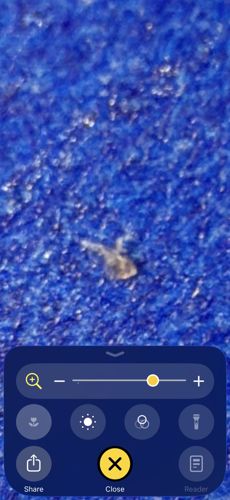
Community identification
Pubic louse
Pthirus pubis
- Order & Family
- Order: Psocodea (formerly Phthiraptera), Family: Pthiridae
- Size
- 1.1 mm to 1.8 mm (about the size of a pinhead)
Natural Habitat
Coarse human body hair, primarily in the pubic region, but also found in eyelashes, eyebrows, beard, and chest hair
Diet & Feeding
Exclusively human blood; they are obligate ectoparasites that feed several times a day
Behavior Patterns
Slow-moving and sedentary; they use specialized claws to grip coarse hair and remain closely attached to the host. Eggs (nits) are glued to hair shafts.
Risks & Benefits
Risks include intense itching (pruritus) due to an allergic reaction to their saliva and potential secondary skin infections from scratching. They are not known to transmit systemic diseases but serve as markers for potential exposure to other STIs.