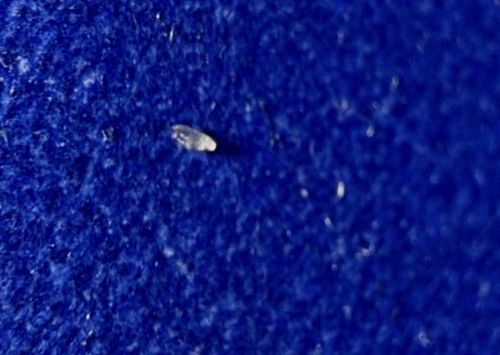
Louse Nit (Head Louse Egg)
Scientific Name: Pediculus humanus capitis (Egg stage)
Order & Family: Order: Phthiraptera, Family: Pediculidae
Size: 0.8 mm by 0.3 mm (roughly the size of a poppy seed or sesame seed)
Natural Habitat
Typically found on the human scalp, cemented firmly near the base of hair shafts, particularly around the ears and neck.
Diet & Feeding
In the egg/nit stage, it does not feed. The hatched nymph and adult louse feed exclusively on human blood obtained from the scalp.
Behavior Patterns
Nits are the immobile egg stage. They are laid by female lice using a specialized glue-like secretion that hardens, making them difficult to remove (unlike dandruff, which easily brush off). They hatch into nymphs in about 7-10 days.
Risks & Benefits
Risks: High nuisance pest causing intense itching, scalp irritation, and potential secondary skin infections from scratching. Social stigma is often associated with infestations. Benefits: None.
Identified on: 2/18/2026