
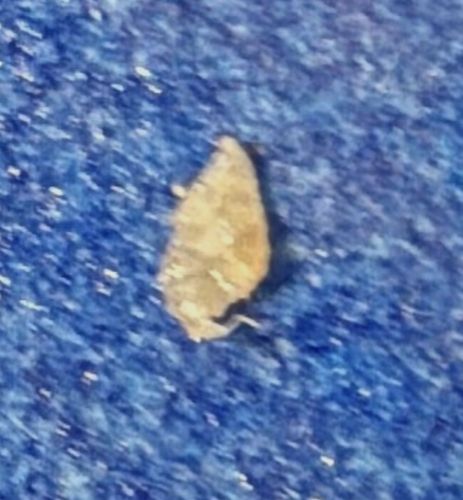
Household Casebearer (often referred to as Plaster Bagworm or Phereoeca)
Phereoeca uterella (or species in the Phereoeca genus such as Phereoeca allutella)
- Order & Family
- Order: Lepidoptera, Family: Tineidae
- Size
- Larval case is typically 8-13 mm (approx. 0.3-0.5 inches) long.
Natural Habitat
Typically found indoors in warm, humid climates; they frequent closets, underneath furniture, near baseboards, garages, and on stucco or brick walls.
Diet & Feeding
Larvae feed on spider webs, old insect skins, wools, hair, and sometimes natural fibers, although Phereoeca uterella is specifically known to feed on spider silk and detritus.
Behavior Patterns
The larva constructs a distinctive flattened, pumpkin-seed or watermelon-seed shaped case made of silk, sand, and debris which it drags around. It can retract fully inside the openings at either end to protect itself.
Risks & Benefits
Generally harmless to humans (does not bite or sting). Considered a minor household pest because they can look unsightly on walls. They occasionally damage woolen fabrics but are less destructive than webbing clothes moths.