
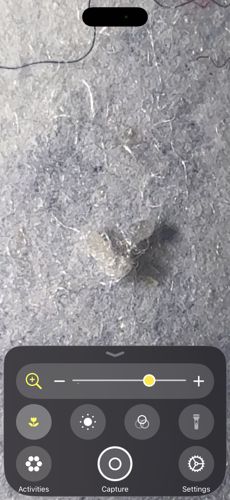
Community identification
Body louse (or Head louse egg/nymph)
Pediculus humanus
- Order & Family
- Psocodea: Pediculidae
- Size
- 2.5 mm to 3.5 mm for adults; nymphs and eggs (nits) are significantly smaller (approx 0.8 mm).
Natural Habitat
In close proximity to the human body, specifically living on or within the seams of clothing and bedding (body louse) or on the human scalp (head louse).
Diet & Feeding
Strictly hematophagous; they feed exclusively on human blood several times a day.
Behavior Patterns
They are wingless and cannot jump or fly, moving only by crawling. Eggs are glued to clothing fibers or hair shafts and hatch in approximately 1-2 weeks. They require frequent blood meals and human body warmth to survive.
Risks & Benefits
Risks include intense itching and skin irritation (pediculosis). Body lice are medically significant as vectors for many diseases, including epidemic typhus, trench fever, and louse-borne relapsing fever. There are no ecological benefits to humans.