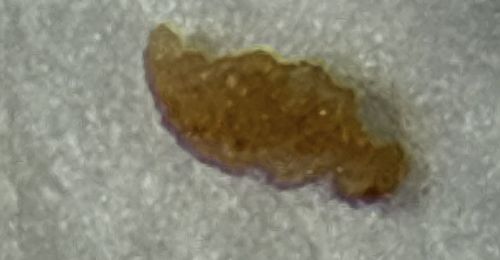
Slug (Potential Dried Specimen or Fragment)
Scientific Name: Gastropoda (Class level identification)
Order & Family: Order: Stylommatophora; Family: Various (e.g., Limacidae or Arionidae)
Size: Varies significantly by species and age, ranging from less than 1 cm to over 15 cm when fully extended. When dried or contracted, they shrink significantly.
Natural Habitat
Typically found in damp, dark environments such as gardens, under rocks, in compost piles, and basements. They thrive in moisture.
Diet & Feeding
Herbivorous or omnivorous; feeds on decaying organic matter, leaves, flowers, fruits, and vegetable crops. Some are fungivores.
Behavior Patterns
Nocturnal activity to avoid desiccation; they produce slime for locomotion and protection. When threatened or drying out, they contract their bodies into a lumpy shape to conserve moisture.
Risks & Benefits
Risks: Can be significant garden pests, damaging crops and ornamental plants. Can carry parasites like lungworm (harmful to pets). Benefits: Important decomposers in ecosystems, breaking down organic matter.
Identified on: 3/5/2026