Human Itch Mite
Scientific Name: Sarcoptes scabiei var. hominis
Order & Family: Order: Sarcoptiformida, Family: Sarcoptidae
Size: Microscopic; females are approximately 0.30 to 0.45 mm long, while males are about half that size.
Natural Habitat
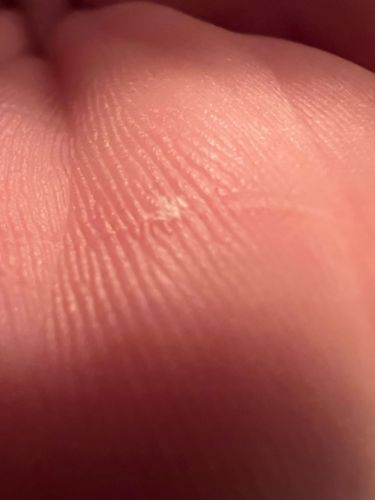
The epidermis (outer layer) of human skin, specifically localized in burrows between fingers, on wrists, or in skin folds.
Diet & Feeding
The mite feeds on dissolved skin cells and extracellular fluid created by the secretion of digestive enzymes into the skin burrow.
Behavior Patterns
Pregnant females burrow into the upper layer of the skin to lay eggs. They move slowly within the epidermis, creating characteristic wavy, thread-like tunnels visible on the skin surface. The life cycle from egg to adult takes about 10-14 days.
Risks & Benefits
Risks include Scabies, a highly contagious skin infestation characterized by intense itching and a pimple-like rash. Secondary bacterial infections can occur from scratching. There are no known ecological benefits to humans; they are considered strict obligate parasites.
Identified on: 2/17/2026