
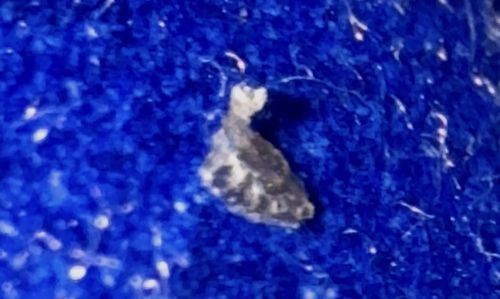
Household Casebearer (often referred to as Plaster Bagworm or Case-bearing Clothes Moth larva)
Phereoeca uterella or Tinea pellionella
- Order & Family
- Order: Lepidoptera, Family: Tineidae
- Size
- Larval case is typically 8–14 mm (0.3–0.5 inches) long.
Natural Habitat
Typically found indoors in dry, dusty areas of homes, garages, and closets. They are most common in humid, tropical, or subtropical climates (e.g., Florida, Southeast Asia).
Diet & Feeding
The larvae feed on keratinous fibers (wool, silk, hair, fur) as well as spider webs, lint, insect droppings, and flaked skin.
Behavior Patterns
The larva constructs a flattened, pumpkin-seed-shaped case made of silk and debris (sand, dust, fibers) which it carries around for protection. It can pull its body inside the case at both ends to turn around.
Risks & Benefits
Risks: Considered a household pest because they can damage woolen clothing, rugs, and upholstery. However, they are generally less destructive than true clothes moths. They do not bite or sting humans. Benefits: Negligible, although they do consume some household detritus.