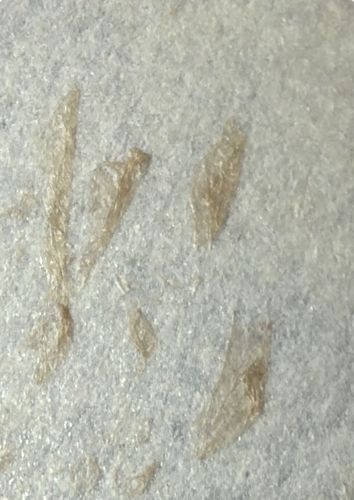
Cockroach Egg Case Fragment (Ootheca) or Molted Skin
Scientific Name: Blattodea (Order)
Order & Family: Order: Blattodea
Size: Dependent on species; German cockroach oothecae are about 6-9mm long, while fragments like these are often 1-5mm.
Natural Habitat
Typically found in warm, humid environments inside buildings, such as kitchens, bathrooms, behind appliances, and in wall voids. Outdoors, they live in soil, mulch, and decaying vegetation.
Diet & Feeding
Omnivorous scavengers; they consume stored food, garbage, paper, cardboard, fabrics, and decaying organic matter.
Behavior Patterns
Cockroaches are nocturnal and thigmotactic (preferring tight spaces). They reproduce by laying egg capsules (oothecae). The image likely shows the desiccated, hatched remains of such a capsule or fragments of shed skin from molting.
Risks & Benefits
Risks: Major household pests that can spread disease-causing bacteria (Salmonella, E. coli), trigger allergies and asthma, and contaminate food. Benefits: In nature, they are decomposers, but inside homes, they offer no benefit.
Identified on: 2/25/2026