
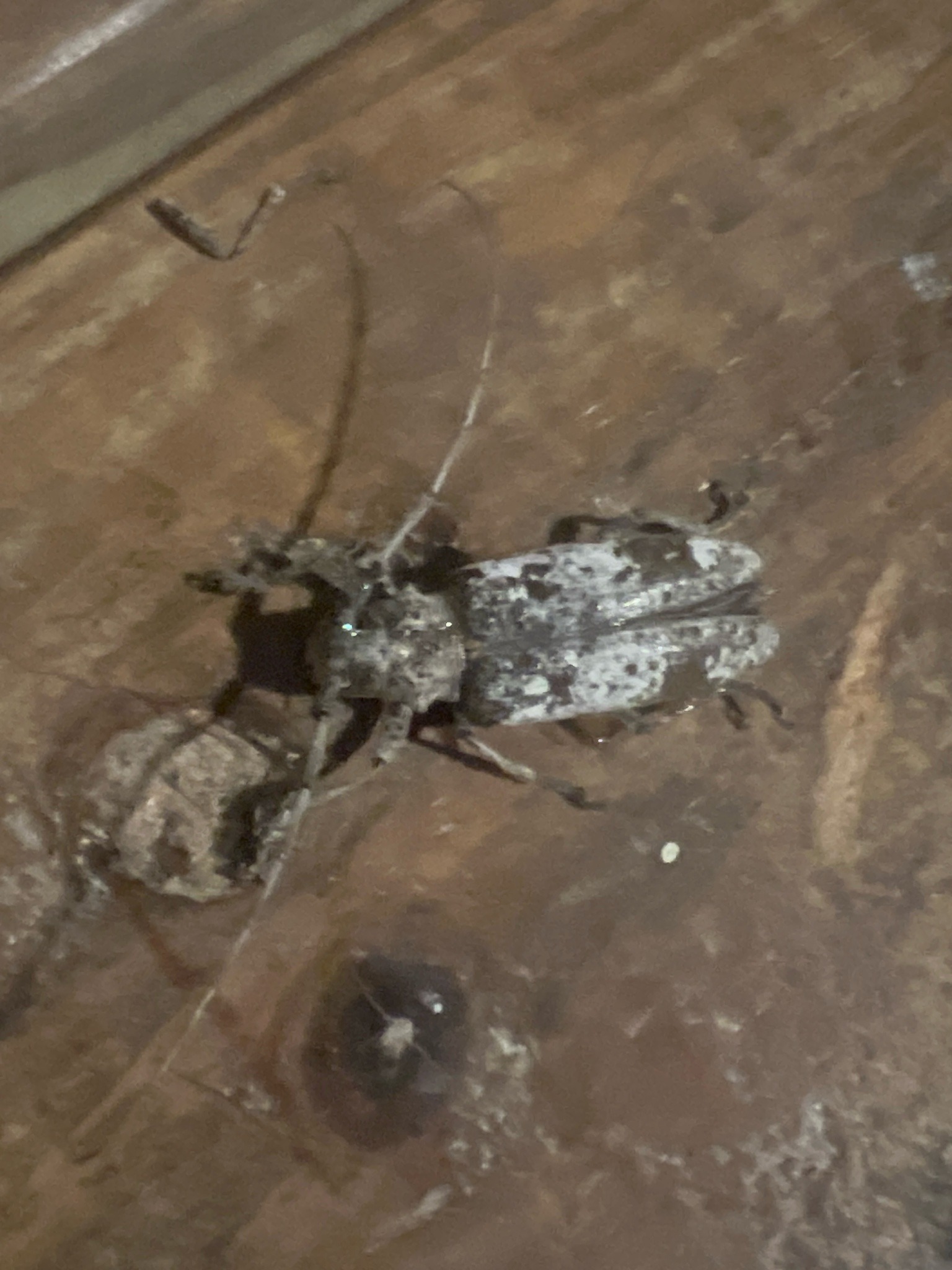
Pine Sawyer Beetle
Monochamus scutellatus
- Order & Family
- Order: Coleoptera, Family: Cerambycidae
- Size
- 15 to 30 mm (0.6 to 1.2 inches) in body length, with antennae often double the body length in males.
Natural Habitat
Coniferous forests, primarily found in or around recently burned, dead, or dying pine, spruce, and balsam fir trees.
Diet & Feeding
Adults feed on the needles and tender bark of conifer twigs. Larvae (known as roundheaded wood borers) feed on the phloem and wood of dead or dying conifers.
Behavior Patterns
They are strong fliers and are highly attracted to the smell of fresh resin or wood smoke. Females lay eggs in niches chewed into the bark of downed or dying wood. The larvae create characteristic 'sawing' sounds as they tunnel deep into the wood to pupate.
Risks & Benefits
Benefits: They play a crucial role in the ecosystem by breaking down dead wood. Risks: While they do not bite humans purposefully, they have strong mandibles that can deliver a pinch if handled. They are considered minor pests in the timber industry as their larval tunnels can degrade the quality of salvaged wood.