
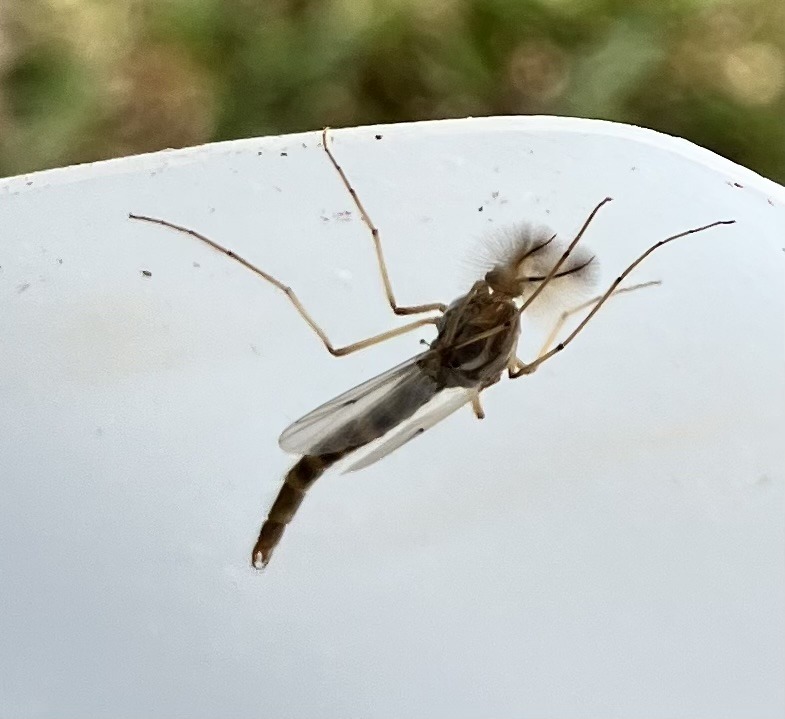
Community identification
Non-biting Midge (Chironomid)
Chironomidae (family)
- Order & Family
- Order Diptera, Family Chironomidae
- Size
- 1 mm to 10 mm in length
Natural Habitat
Found near aquatic environments including lakes, ponds, slow-moving rivers, and wetlands.
Diet & Feeding
Adults generally do not feed as their lifespan is short, though some may consume nectar or honeydew. Larvae (bloodworms) eat organic debris and algae.
Behavior Patterns
Males have large, feather-like antennae used to detect female pheromones. They often form large mating swarms known as 'clouds' during dusk or dawn. They are attracted to artificial lights.
Risks & Benefits
Benefits: Crucial food source for fish, birds, and other insects. Risks: No bite or sting, but massive swarms can be a nuisance to humans and may cause allergic reactions in some individuals.