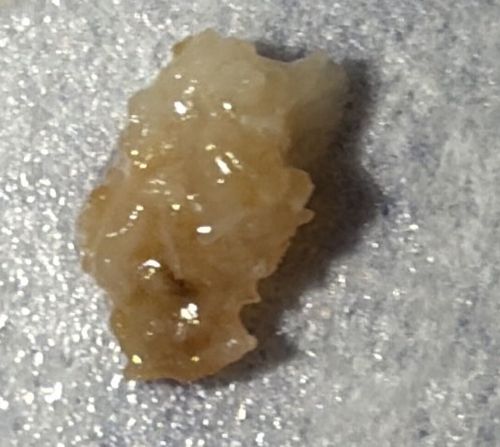
Tonsil Stone (Tonsillolith)
Scientific Name: Tonsillolith
Order & Family: Non-living (Not applicable - Calcified debris)
Size: Variable; usually ranges from small grains (1-2mm) to larger formations like peas or grapes (1cm+).
Natural Habitat
Typically found within the crypts (crevices) of the palatine tonsils in the human throat.
Diet & Feeding
Not an organism, so it does not feed. It is formed from accumulated food particles, bacteria, mucus, and dead cells.
Behavior Patterns
Accumulates over time in tonsil crypts. Can be dislodged by coughing, sneezing, or manual removal.
Risks & Benefits
Risks: Can cause chronic bad breath (halitosis), sore throat, difficulty swallowing, or ear pain. Benefits: None.
Identified on: 2/20/2026