
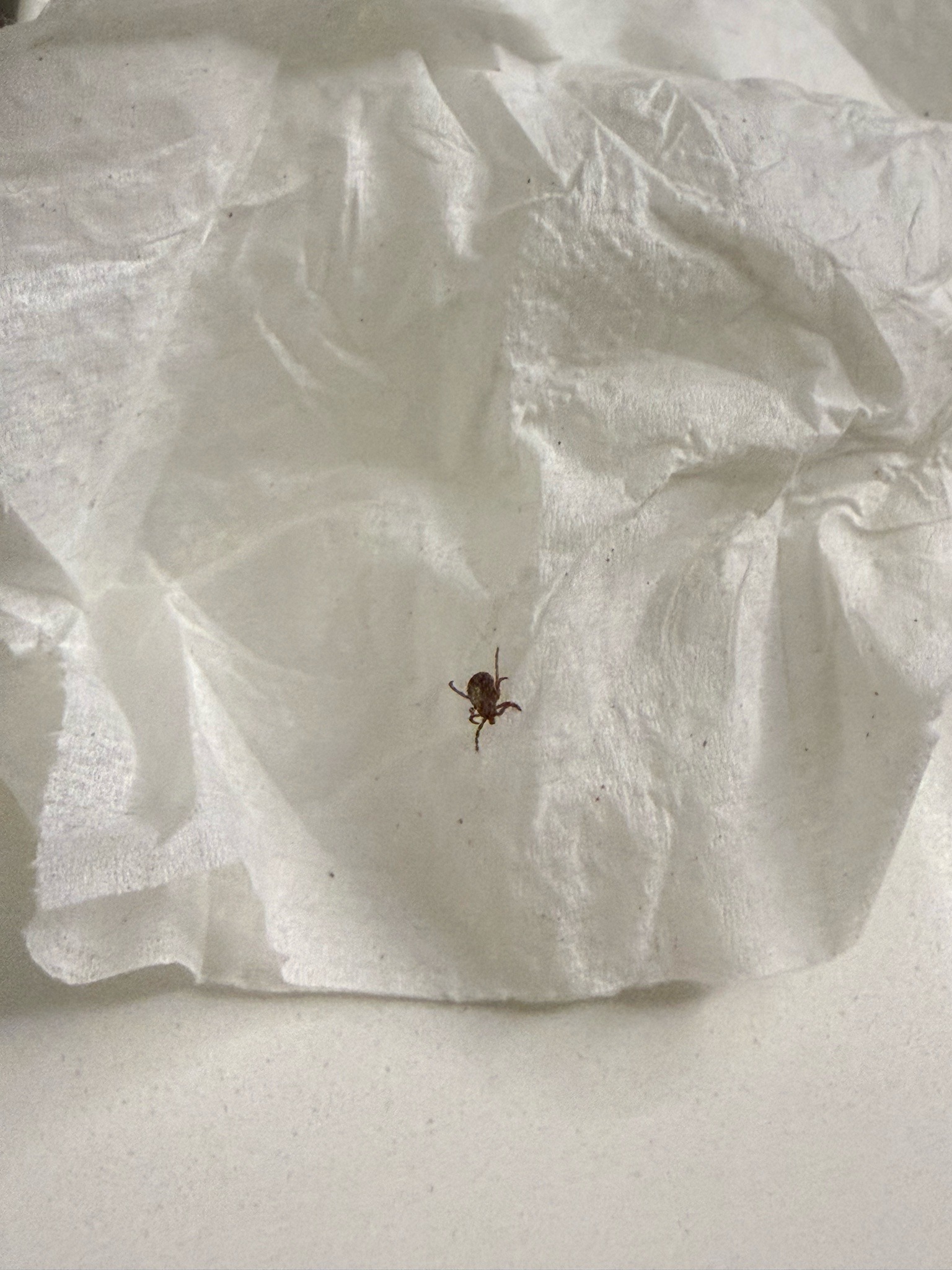
Community identification
American Dog Tick
Dermacentor variabilis
- Order & Family
- Order Ixodida, Family Ixodidae
- Size
- 3mm to 5mm (unfed adults); can grow up to 15mm when fully engorged.
Natural Habitat
Found in areas with little or no tree cover, such as grassy fields, walkways, and trails, particularly in the Eastern and Gulf Coast regions of North America.
Diet & Feeding
Obligate hematophage (blood-feeder) that feeds on the blood of mammals, including dogs, horses, and humans.
Behavior Patterns
Employs a 'questing' behavior where it climbs to the tips of grasses to wait for a host to pass by. It has a three-host life cycle (larva, nymph, adult) which usually takes two years to complete.
Risks & Benefits
Poses significant health risks as a primary vector for Rocky Mountain spotted fever and tularemia. It can also cause tick paralysis in dogs and humans. It has no known benefits to the human ecosystem.