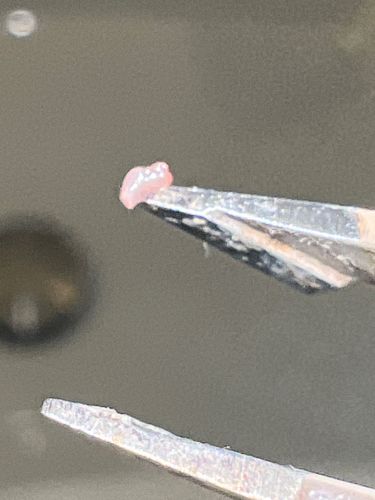
Tonsil Stone (Tonsillolith)
Scientific Name: Tonsillolith
Order & Family: Non-taxonomic (Biocalcification)
Size: Typically 1mm to 10mm, though they can rarely grow larger.
Natural Habitat
Found in the crevices (tonsillar crypts) of the palatine tonsils in the human throat.
Diet & Feeding
Not an organism; it forms from debris like dead cells, mucus, saliva, and food particles trapped in tonsil folds.
Behavior Patterns
They are inanimate calcified structures. They form when trapped matter hardens and acts as a breeding ground for anaerobic bacteria, often producing a foul odor.
Risks & Benefits
Risks include halitosis (bad breath), sore throat, and difficulty swallowing. There are no known benefits, but they are generally harmless and non-parasitic.
Identified on: 2/6/2026