
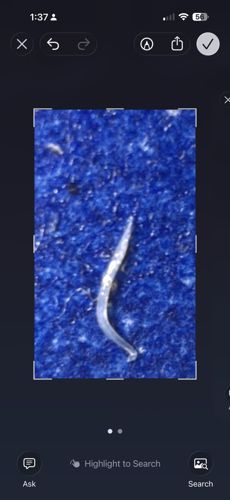
Flea Larva
Ctenocephalides felis (most common) or Ctenocephalides canis
- Order & Family
- Order: Siphonaptera, Family: Pulicidae
- Size
- 2 to 5 mm (approx. 1/8 to 1/4 inch) in length
Natural Habitat
Found in dark, protected areas where pets sleep or rest, such as carpets, bedding, cracks in floorboards, or shaded areas outdoors in soil.
Diet & Feeding
Scavengers that feed on organic debris, particularly 'flea dirt' (dried blood excreted by adult fleas), skin flakes, and other small organic particles.
Behavior Patterns
They are negatively phototactic (avoid light) and will burrow deep into carpet fibers or bedding. They spin a sticky, silken cocoon in which they pupate before emerging as adults.
Risks & Benefits
Risks include developing into biting adult fleas that infest pets and humans, causing itching, allergic dermatitis, and potentially transmitting tapeworms or diseases like typhus and plague. No significant ecosystem benefit in a domestic setting.