Mold Mite (or Storage Mite)
Scientific Name: Tyrophagus putrescentiae
Order & Family: Order: Sarcoptiformes, Family: Acaridae
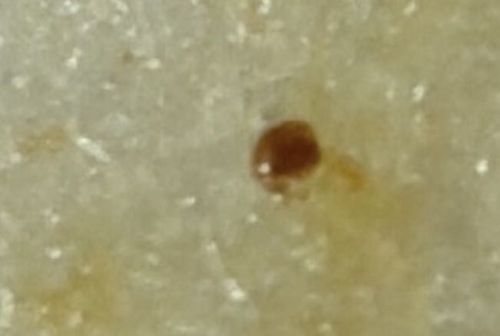
Size: Very small, usually 0.3 mm to 0.7 mm in length (often visible to the naked eye only as mobile 'dust').
Natural Habitat
Typically found in environments with high humidity (above 60-70%) and warm temperatures. They inhabit stored food products (grains, cheese, flour, dry pet food, ham), damp wallpaper, and moldy furniture.
Diet & Feeding
They feed primarily on fungi (molds) growing on food products or damp surfaces. They also consume stored foods rich in protein and fat, such as cheese, cured meats, grain, seeds, and flour.
Behavior Patterns
They are often seen in huge congregations, appearing as a layer of 'living dust' on contaminated items. They reproduce rapidly under humid conditions. Unlike some pests, they do not bite humans but are indicators of spoilage and excessive moisture.
Risks & Benefits
Risks: They are a common cause of occupational allergies (e.g., baker's itch, grocer's itch) and can trigger asthma or rhinitis in sensitive individuals. They contaminate and spoil stored food, imparting a distinctive sweet/minty odor due to their secretions. Benefits: They play a minor role in nutrient cycling in natural settings by breaking down fungi, but are overwhelmingly considered pests in domestic settings.
Identified on: 2/17/2026