
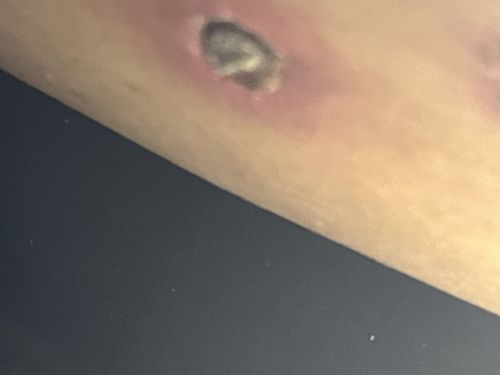
Human Botfly Larva
Dermatobia hominis
- Order & Family
- Order: Diptera; Family: Oestridae
- Size
- Larvae grow up to 18-25 mm in length and 7 mm in diameter.
Natural Habitat
Found primarily in moist tropical lowland forests of Central and South America; the larva develops in the host's skin.
Diet & Feeding
The larva is an obligate parasite, feeding on the living tissue and fluids (exudate) of its mammal host within a subcutaneous lesion (warble).
Behavior Patterns
The adult fly glues its eggs onto blood-sucking insects like mosquitoes. When the secondary insect bites a host, the botfly eggs hatch and the larvae burrow into the host's skin. They remain there for 5-10 weeks, breathing through a small hole, before dropping out to pupate in the soil.
Risks & Benefits
Risks include physical pain, a sensation of movement under the skin, and potential secondary bacterial infections at the site of the lesion. There are no ecological benefits to the host; the parasite serves only as a link in its specific food chain.