
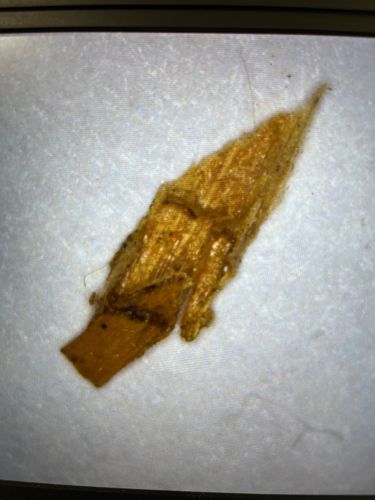
Case-bearing Clothes Moth larva (with case)
Tinea pellionella
- Order & Family
- Lepidoptera (moths and butterflies), Tineidae (fungus moths and clothes moths)
- Size
- Larvae are typically 10-14 mm long (including the case), while adult moths are 6-10 mm in wingspan.
Natural Habitat
Indoors, particularly in dark, undisturbed areas where animal-based materials are stored. This includes closets, attics, storage chests, and beneath furniture.
Diet & Feeding
The larvae feed on keratin-containing materials such as wool, fur, feathers, hair, felt, and other animal fibers. They can also consume blends that contain these materials and occasionally plant-based fibers if they are soiled with perspiration.
Behavior Patterns
The larva constructs a silken, portable case incorporating fibers from its feeding material, which it carries with it as it moves and feeds. It can retract fully into the case for protection. Larvae are typically slow-moving and prefer dark, humid conditions. Adults are weak fliers and are attracted to light, but often prefer to hide in dark areas during the day.
Risks & Benefits
Potential risks include significant damage to clothing, carpets, upholstery, and other textiles made from natural fibers. They are considered pests. There are no known direct benefits from this insect to humans or the ecosystem, though they contribute to the decomposition of natural fibers in natural settings.