
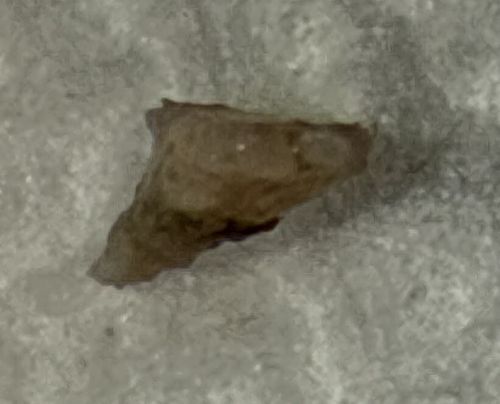
Household Casebearer or Plaster Bagworm
Phereoeca uterella
- Order & Family
- Order: Lepidoptera, Family: Tineidae
- Size
- Larval case is typically 8-13 mm (0.3 to 0.5 inches) long
Natural Habitat
Typically found indoors in humid climates, often on walls, under spiderwebs, in closets, or undisturbed corners of homes and garages. They are particularly common in Florida and other warm, damp regions.
Diet & Feeding
The larvae feed on old spider webs (which gives them the nickname 'spider web cleaners'), silk, wool, human hair, pet fur, and dead insect parts. They generally do not eat cotton or synthetic fibers.
Behavior Patterns
The larva builds a protective, flattened, pumpkin-seed-shaped case out of silk and particles of sand, lint, paint chips, or other debris from its environment. This camouflage allows it to blend in with its surroundings. The larva carries this case around with it as it moves, protruding its head and legs from either end to feed or travel.
Risks & Benefits
They are generally considered a nuisance pest rather than a health hazard. They do not bite or sting humans. While they can damage woolen fabrics or silk, they are not usually a major threat to clothing compared to clothes moths. Their consumption of old spider webs could be seen as a minor housekeeping benefit, but most people find their presence on walls unsightly.