
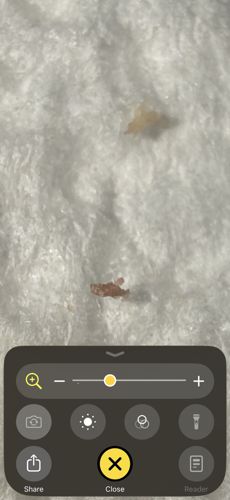
Head Louse
Pediculus humanus capitis
- Order & Family
- Order: Phthiraptera, Family: Pediculidae
- Size
- Adults are typically 2 to 3 millimeters long (roughly the size of a sesame seed). Immature nymphs are smaller, ranging from pinhead size up to adult size.
Natural Habitat
Exclusively inhabits the human scalp and hair, particularly close to the skin at the neckline and behind the ears. They do not survive long away from a human host.
Diet & Feeding
Hematophagous parasites that feed exclusively on human blood several times a day. The reddish-brown color seen in the photo typically indicates a recent blood meal.
Behavior Patterns
They are wingless insects that move by crawling along hair shafts; they cannot jump or fly. Females lay eggs (nits) cemented firmly to hair strands near the scalp. They are obligate parasites, meaning they require a host to survive.
Risks & Benefits
Risks: They cause pediculosis (lice infestation), resulting in intense itching, scalp irritation, and potential secondary bacterial infections from scratching. They are a nuisance and cause anxiety but typically do not transmit diseases.