Dust Mite (or Dust Mite Debris/Exuviae)
Scientific Name: Dermatophagoides spp. (most commonly Dermatophagoides farinae or Dermatophagoides pteronyssinus)
Order & Family: Order: Sarcoptiformes, Family: Pyroglyphidae
Size: Microscopic; typically 0.2 to 0.3 millimeters in length. They are generally invisible to the naked eye.
Natural Habitat
Indoor environments, specifically thriving in soft furnishings like mattresses, pillows, carpets, and upholstered furniture where dust accumulates.
Diet & Feeding
Detritivores feeding primarily on dead skin cells (dander) shed by humans and animals, as well as fungal spores.
Behavior Patterns
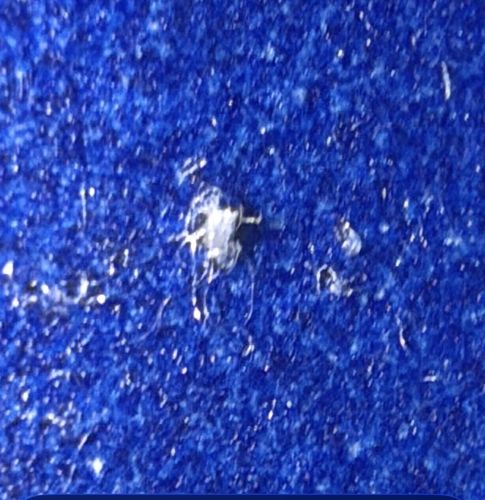
They are photophobic (afraid of light) and tend to bury deep into fibers. They require humidity (around 50-75%) to survive as they absorb water from the air. The image likely shows a dead mite or shed skin skeleton rather than a live, active one.
Risks & Benefits
Risks: Highly allergenic. Their feces and body fragments contain proteins that can trigger asthma, eczema, and perennial allergic rhinitis in sensitive individuals. Benefits: They act as microscopic scavengers cleaning up organic waste (skin cells), though this benefit is usually outweighed by the allergic potential in homes.
Identified on: 2/15/2026