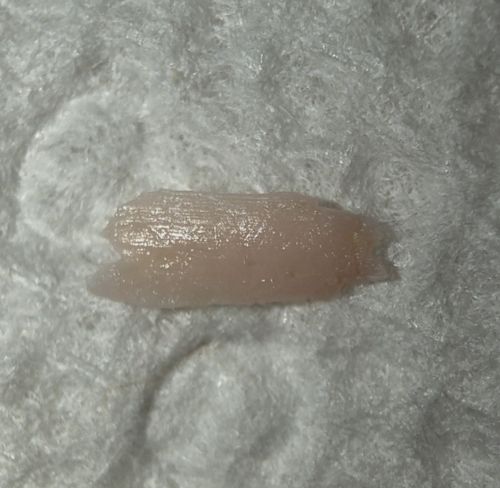
Tapeworm Segment (Proglottid)
Scientific Name: Dipylidium caninum (most likely, assuming domestic pet context) or Taenia species
Order & Family: Order: Cyclophyllidea / Family: Dipylidiidae or Taeniidae
Size: Segments are typically 3-12 mm in length (about the size of a grain of rice or cucumber seed).
Natural Habitat
The intestinal tract of dogs and cats (and rarely humans). They are often found in animal bedding, near the anus of infected pets, or in fresh feces.
Diet & Feeding
As an adult parasite, it absorbs nutrients directly through its skin from the host's digested food within the intestine.
Behavior Patterns
These segments (proglottids) detach from the adult worm in the intestine and exit via the anus. Fresh segments can move by expanding and contracting. As they dry out, they harden and look like sesame seeds or rice grains, eventually releasing eggs into the environment.
Risks & Benefits
Risks: Indicates a parasitic infection in pets (usually transmitted by swallowing infected fleas). While generally not life-threatening to the pet, they cause discomfort, itchiness (scooting), and weight loss. Zoonotic potential exists but is rare (humans, usually children, can be infected by swallowing an infected flea). Benefits: None.
Identified on: 2/10/2026