Louse Nit (Head Louse Egg)
Scientific Name: Pediculus humanus capitis (Egg stage)
Order & Family: Order: Phthiraptera, Family: Pediculidae
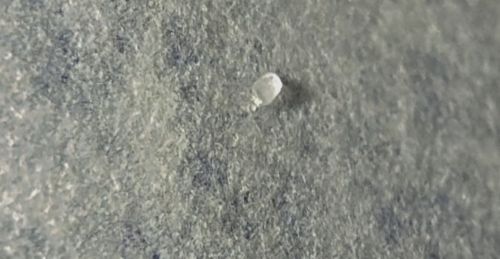
Size: Approximately 0.8 mm by 0.3 mm (roughly the size of a pinhead or a sesame seed).
Natural Habitat
Exclusively found on the human scalp and hair shafts, typically located close to the scalp especially behind the ears and near the neckline.
Diet & Feeding
As an egg (nit), it does not feed. However, the hatched nymph and adult louse feed exclusively on human blood obtained from the scalp.
Behavior Patterns
Nits are firmly cemented to hair shafts by adult females using a glue-like secretion. They do not move. If the nit is white or clear, it has often already hatched or failed to develop; viable eggs are usually darker and closer to the scalp. They hatch in about 7-10 days.
Risks & Benefits
Risks: Infestations (pediculosis) cause intense itching, which can lead to secondary skin infections from scratching. They are highly contagious through head-to-head contact. Benefits: None known to humans or the general ecosystem.
Identified on: 3/1/2026