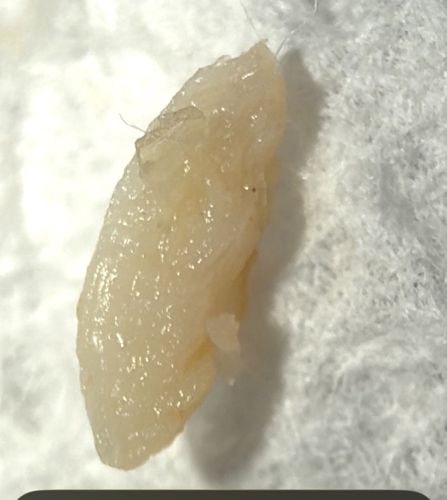
Tapeworm Segment (Proglottid)
Scientific Name: Dipylidium caninum (most likely)
Order & Family: Order: Cyclophyllidea, Family: Dipylidiidae
Size: Segments are typically rice-grain sized or cucumber-seed sized, roughly 3-12 mm long when released.
Natural Habitat
Intestines of host animals (usually cats or dogs); segments are often found on animal fur near the anus, in bedding, or in feces.
Diet & Feeding
As adults, tapeworms absorb nutrients directly from the host's digestive tract.
Behavior Patterns
Adult worms live in the small intestine. They shed terminal segments (proglottids) that contain egg packets. These segments are mobile when fresh and can crawl around the perianal area, causing itching. They eventually dry out and look like sesame seeds or rice grains.
Risks & Benefits
Risk: Parasitic infection. While generally not severe in pets, heavy infestations can cause weight loss and irritation. They are zoonotic, meaning humans (especially children) can be infected if they accidentally ingest an infected flea (the intermediate host). Benefit: None.
Identified on: 2/24/2026