
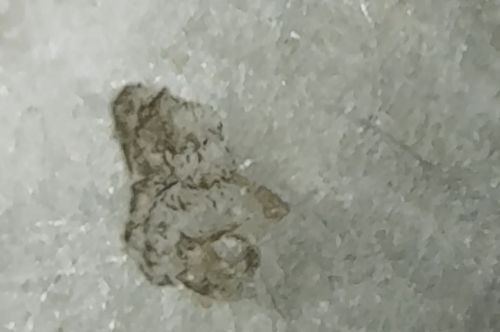
Household Casebearer (also known as the Plaster Bagworm)
Phereoeca uterella
- Order & Family
- Order: Lepidoptera, Family: Tineidae
- Size
- Larval case is typically 8-13 mm (0.3-0.5 inches) long.
Natural Habitat
Commonly found indoors on interior walls, particularly in garages, closets, and underneath spider webs. They thrive in high-humidity environments and are widespread in tropical and subtropical regions.
Diet & Feeding
The larvae feed on old spider webs, wool, hair, lint, and other general household organic debris. They may occasionally consume dead insects.
Behavior Patterns
The larva builds a flattened, pumpkin-seed-shaped protective case out of silk and small particles of debris (sand, soil, frass). It drags this case around to move and can retract inside at both ends when threatened. Before pupating, it attaches the case to a vertical surface.
Risks & Benefits
Risks: Generally harmless to humans and pets (they do not bite or sting), but they can be a minor nuisance pest in homes. They may occasionally damage natural fibers like wool, though they prefer spider silk. Benefits: They act as a minor cleanup crew by eating spider webs and dead insects.