Scabies Mite
Scientific Name: Sarcoptes scabiei var. hominis
Order & Family: Order: Sarcoptiformes, Family: Sarcoptidae
Size: Microscopic; females are 0.30–0.45 mm long and 0.25–0.35 mm wide; males are slightly smaller.
Natural Habitat
The epidermis (outer layer) of human skin; they cannot survive for more than 2-3 days away from human skin.
Diet & Feeding
Feeds on dissolved human tissues but does not feed on blood.
Behavior Patterns
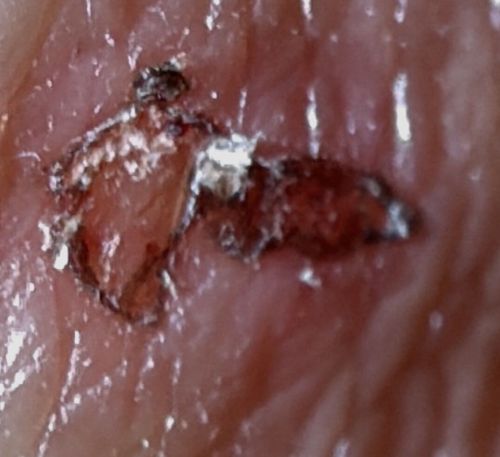
Female mites burrow into the upper layer of the skin to live and lay eggs, creating characteristic wavy, grayish-white tunnels (burrows). The life cycle from egg to adult takes about 10-15 days. They are most active at night, which is when itching is often most intense.
Risks & Benefits
Risks: causes Scabies, a highly contagious skin infestation characterized by intense itching and a pimple-like skin rash. Scratching can lead to secondary bacterial infections like impetigo. Benefits: None known to humans or ecosystems.
Identified on: 3/8/2026