
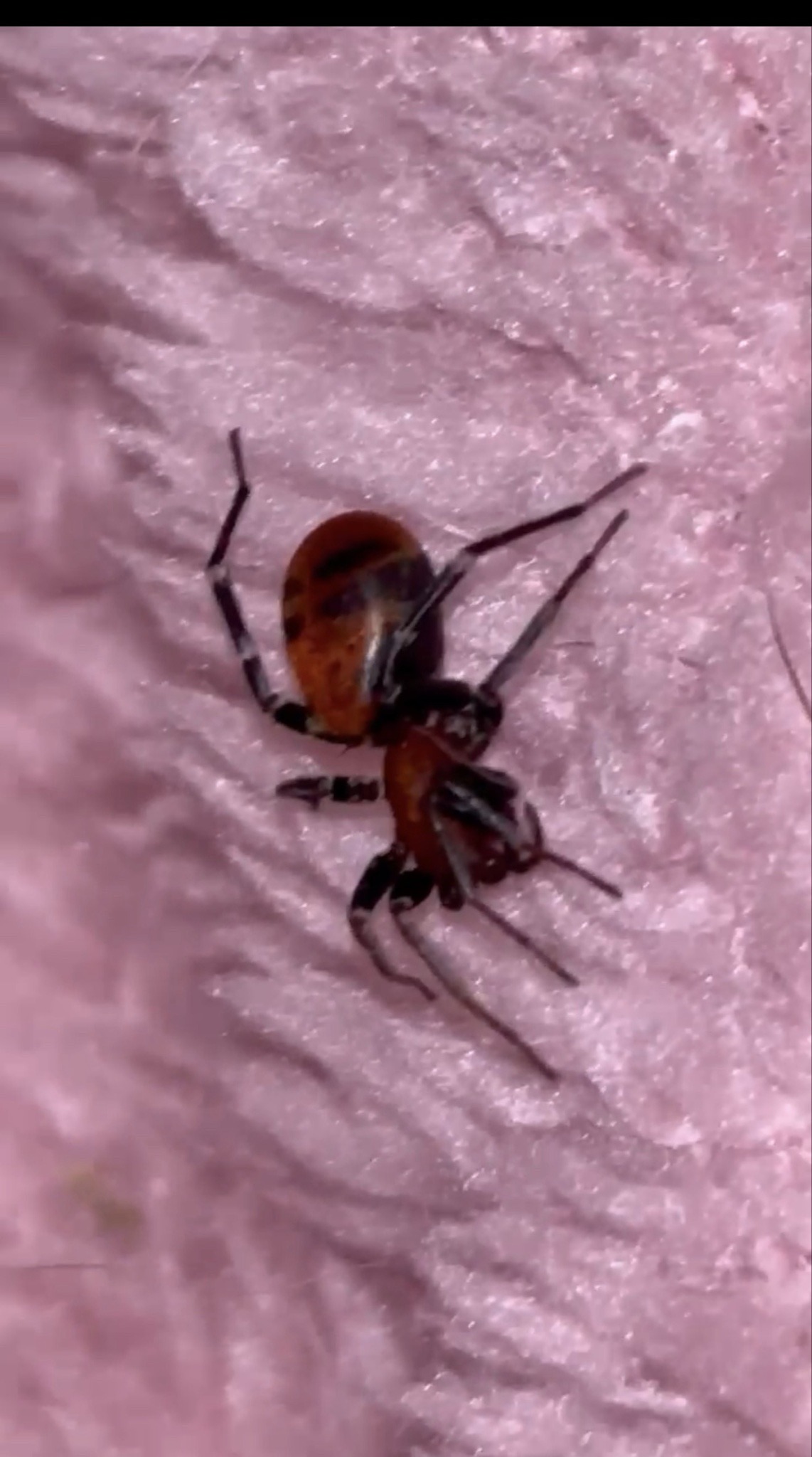
Ant-mimic spider (specifically a member of the Castianeira genus)
Castianeira spp. (likely Castianeira descripta)
- Order & Family
- Order Araneae, Family Corinnidae
- Size
- 3 to 10 mm in body length (males are generally smaller than females).
Natural Habitat
Typically found in leaf litter, under rocks, or on low vegetation in gardens, forests, and grassy areas; they occasionally wander into homes.
Diet & Feeding
Strictly insectivorous; they hunt other spiders and small insects like flies and ants by active pursuit rather than building webs.
Behavior Patterns
They are diurnal hunters that mimic the appearance and movements of ants or wasps to avoid predators and sneak up on prey. They do not spin webs for catching food, but use silk only for egg sacs and retreats.
Risks & Benefits
They are beneficial garden predators that control pest populations. While they are venomous (all spiders are), their bite is generally not considered medically significant to humans, though it may cause localized pain and swelling similar to a bee sting if handled roughly.