
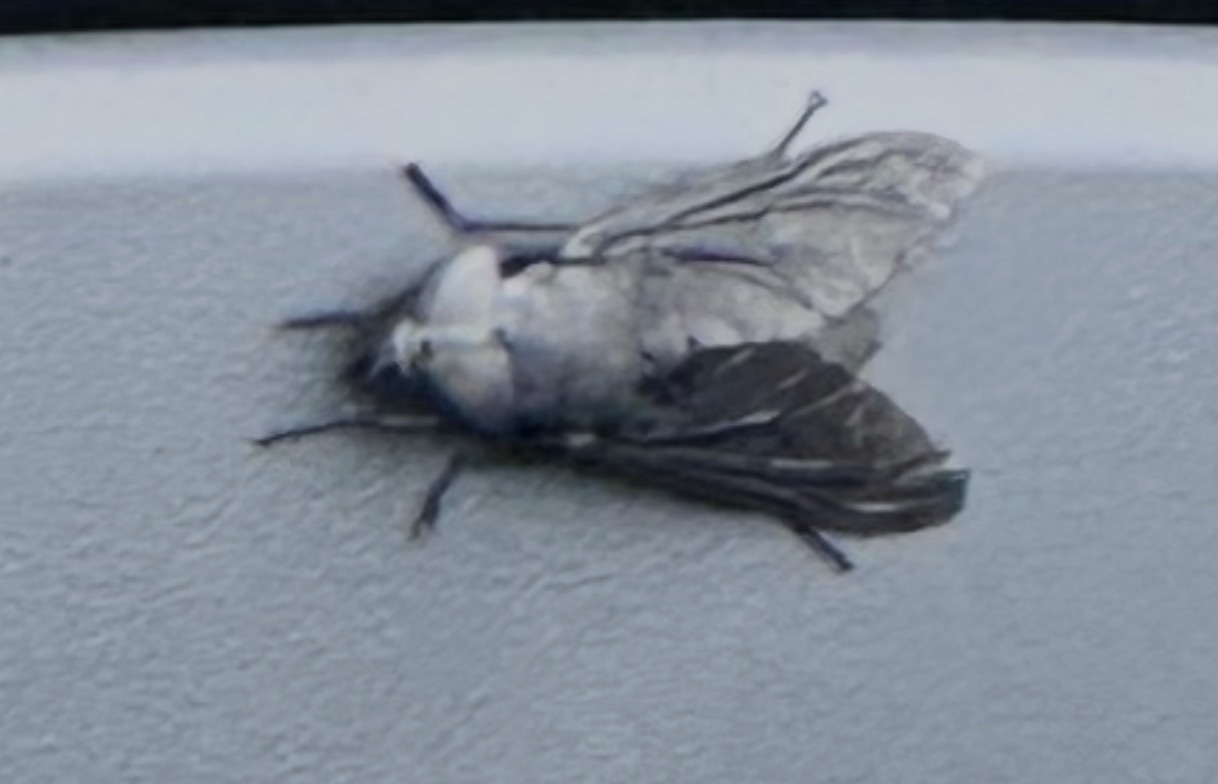
Community identification
Black Horse Fly
Tabanus atratus
- Order & Family
- Diptera: Tabanidae
- Size
- 20 to 28 mm in length
Natural Habitat
Marshy areas, wetlands, and wooded edges where larval development occurs in moist soil
Diet & Feeding
Adult females feed on the blood of large mammals including horses and cattle; males feed on nectar and pollen
Behavior Patterns
Diurnal active fliers that use visual cues and CO2 to track prey; females lay egg masses on vegetation overhanging water
Risks & Benefits
Females deliver a painful bite to humans and livestock and can transmit pathogens; they serve as a food source for birds and are minor pollinators