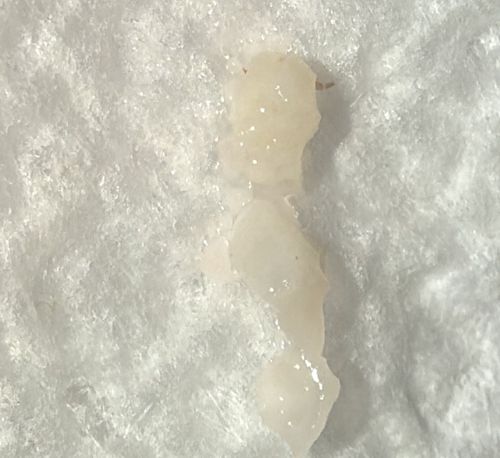
Slime Mold (specifically likely a plasmodium stage, often mistaken for an insect or egg mass)
Scientific Name: Myxomycetes (Class)
Order & Family: Physarales / Physaraceae (Likely, though difficult to pinpoint strictly from a single visual)
Size: Varies widely from microscopic to several square meters; the specimen shown appears to be a few millimeters to a centimeter in length.
Natural Habitat
Found in dark, moist environments, often on decaying wood, leaf litter, soil, and occasionally on living plants or even indoors in damp areas.
Diet & Feeding
Feeds on bacteria, yeast, fungal spores, and decaying organic matter through phagocytosis.
Behavior Patterns
The 'plasmodium' stage moves slowly like a giant amoeba, pulsing rhythmically to engulf food particles. It eventually transforms into fruiting bodies to release spores.
Risks & Benefits
Generally harmless to humans and animals; beneficial as decomposers in ecosystems, breaking down organic material and recycling nutrients.
Identified on: 2/23/2026