
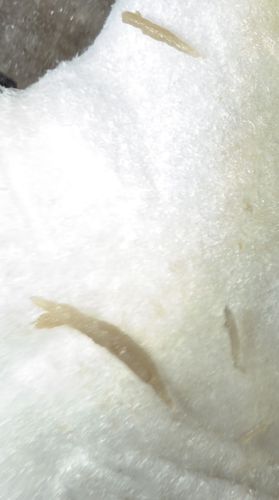
Community identification
Flea Larva
Ctenocephalides felis (most common)
- Order & Family
- Order: Siphonaptera, Family: Pulicidae
- Size
- 2 to 5 mm (approx. 1/8 to 1/4 inch) in length
Natural Habitat
Dark, protected areas; deep in carpets, bedding, pet fur, cracks in flooring, or anywhere organic debris and flea dirt accumulate.
Diet & Feeding
Organic debris, particularly dried blood feces (flea dirt) excreted by adult fleas, pet dander, and other insect particles.
Behavior Patterns
They avoid light (negatively phototactic) and burrow deep into carpets or bedding. They are extremely active and move in a wiggling motion. They spin silk cocoons to pupate before becoming adults.
Risks & Benefits
Risks: As the precursor to adult fleas, they perpetuate infestations that cause itching, allergic dermatitis, and can transmit tapeworms and diseases (like typhus). Benefits: None to humans or pets; they are considered a pest.