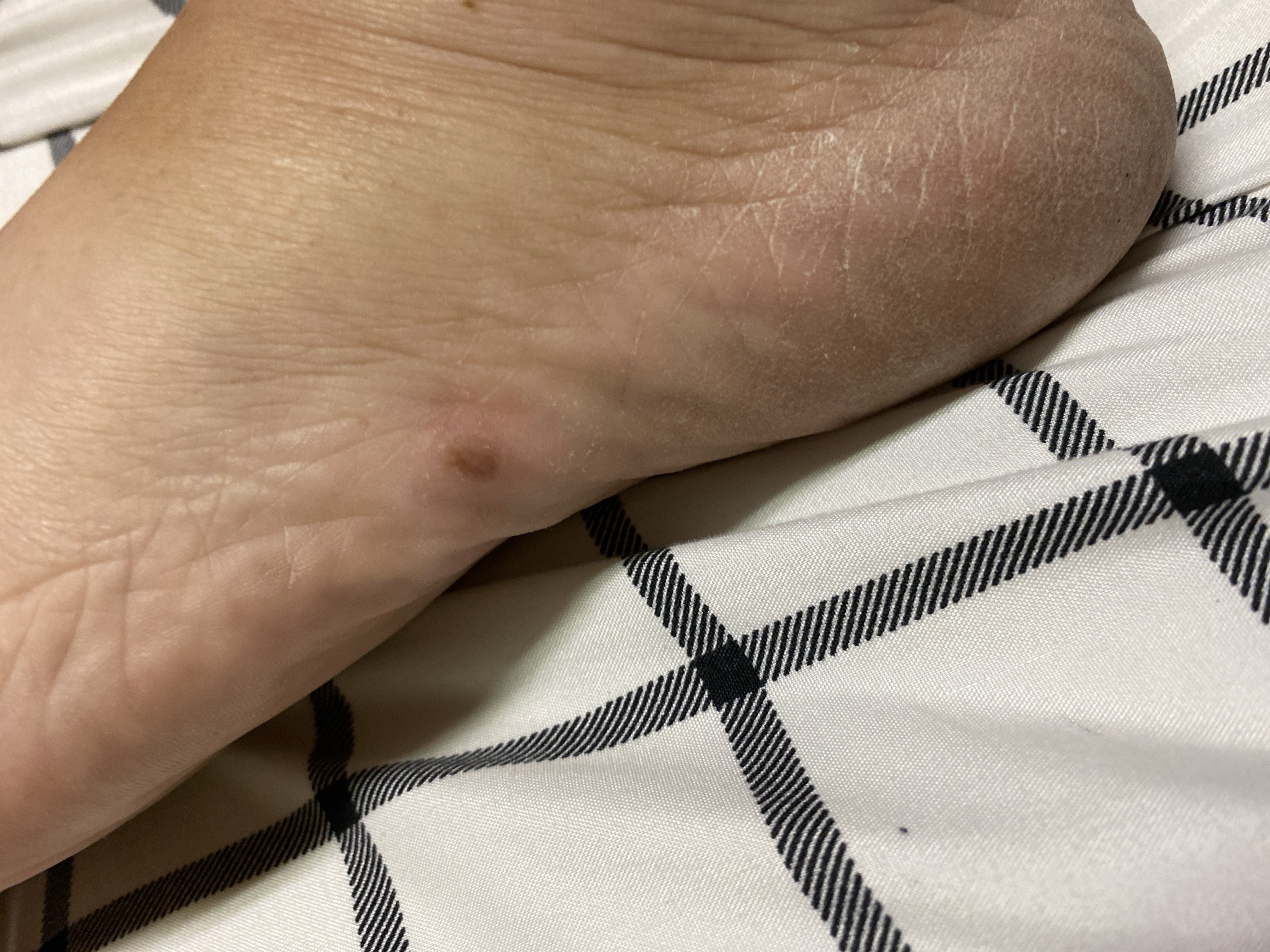
Chigoe flea (also known as jigger or sand flea)
Scientific Name: Tunga penetrans
Order & Family: Order: Siphonaptera; Family: Tungidae
Size: Approximately 1 mm in length; an engorged female can grow to the size of a pea (up to 10 mm).
Natural Habitat
Tropical and subtropical regions, specifically in dry, sandy soil, dust, and stables in parts of Central and South America, the Caribbean, and sub-Saharan Africa.
Diet & Feeding
Both males and females feed on mammalian blood. The female burrows into the host's skin to feed and lay eggs.
Behavior Patterns
The female flea burrows into the skin of a host (often the feet or ankles), where it remains for several weeks, swelling as it develops hundreds of eggs before eventually dying and being sloughed off by the skin.
Risks & Benefits
Causes tungiasis, resulting in severe inflammation, pain, itching, and secondary bacterial infections like tetanus or gangrene. There are no ecological benefits to humans.
Identified on: 6/29/2026