
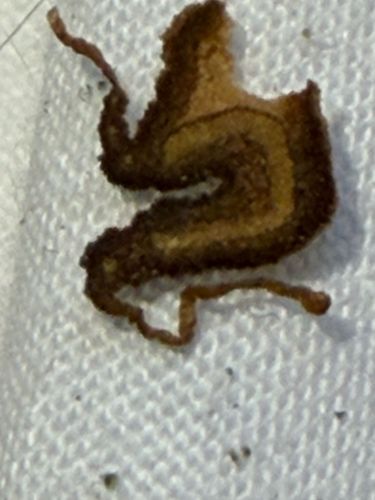
Community identification
Monkey Slug (Moth Larva)
Phobetron pithecium
- Order & Family
- Lepidoptera: Limacodidae
- Size
- Larvae reach approximately 1 inch (25 mm) in length.
Natural Habitat
Found in deciduous forests and orchards, often on the undersides of leaves of trees like oak, birch, apple, hickory, and chestnut.
Diet & Feeding
Herbivorous caterpillar; feeds on a variety of deciduous trees and shrubs, including cherry, apple, and various fruit trees.
Behavior Patterns
Features arm-like hairy projections that can drop off to distract predators; mimics a dried leaf or a shed tarantula skin to avoid bird predation. It undergoes complete metamorphosis.
Risks & Benefits
Risk: The hairs contain stinging spines that can cause a localized skin reaction, redness, and irritation in humans upon contact. Benefit: They are part of the natural forest ecosystem and food web, though rarely numerous enough to cause significant tree damage.