
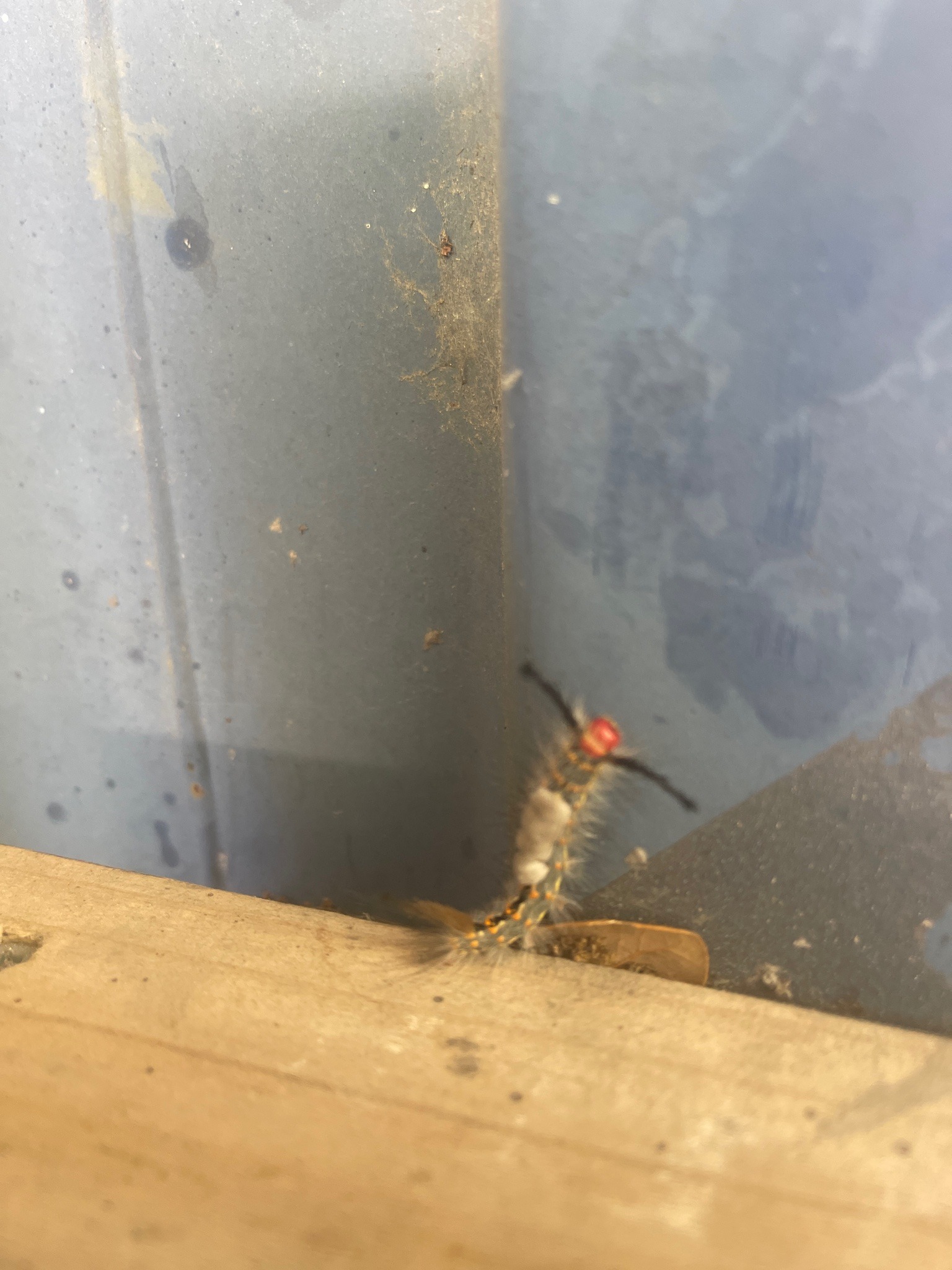
Community identification
White-marked Tussock Moth Caterpillar
Orgyia leucostigma
- Order & Family
- Order: Lepidoptera; Family: Erebidae
- Size
- Late-stage larvae reach approximately 1 to 1.5 inches (25-38 mm) in length.
Natural Habitat
Deciduous and coniferous forests, shrublands, and urban parks/gardens throughout North America.
Diet & Feeding
Broad generalist herbivore; feeds on foliage of many trees including oak, maple, birch, apple, and even some conifers like larch and fir.
Behavior Patterns
Larvae are active during the day. They have four distinct white brush-like tufts on their back and two long black hair pencils at the front. Females are flightless and stay on their cocoons to lay eggs.
Risks & Benefits
Risks: The hairs (setae) are defensive and can cause skin irritation, rashes, or allergic reactions in humans. Large populations can cause significant defoliation to trees. Benefits: They serve as a food source for birds and parasitic insects in the local ecosystem.