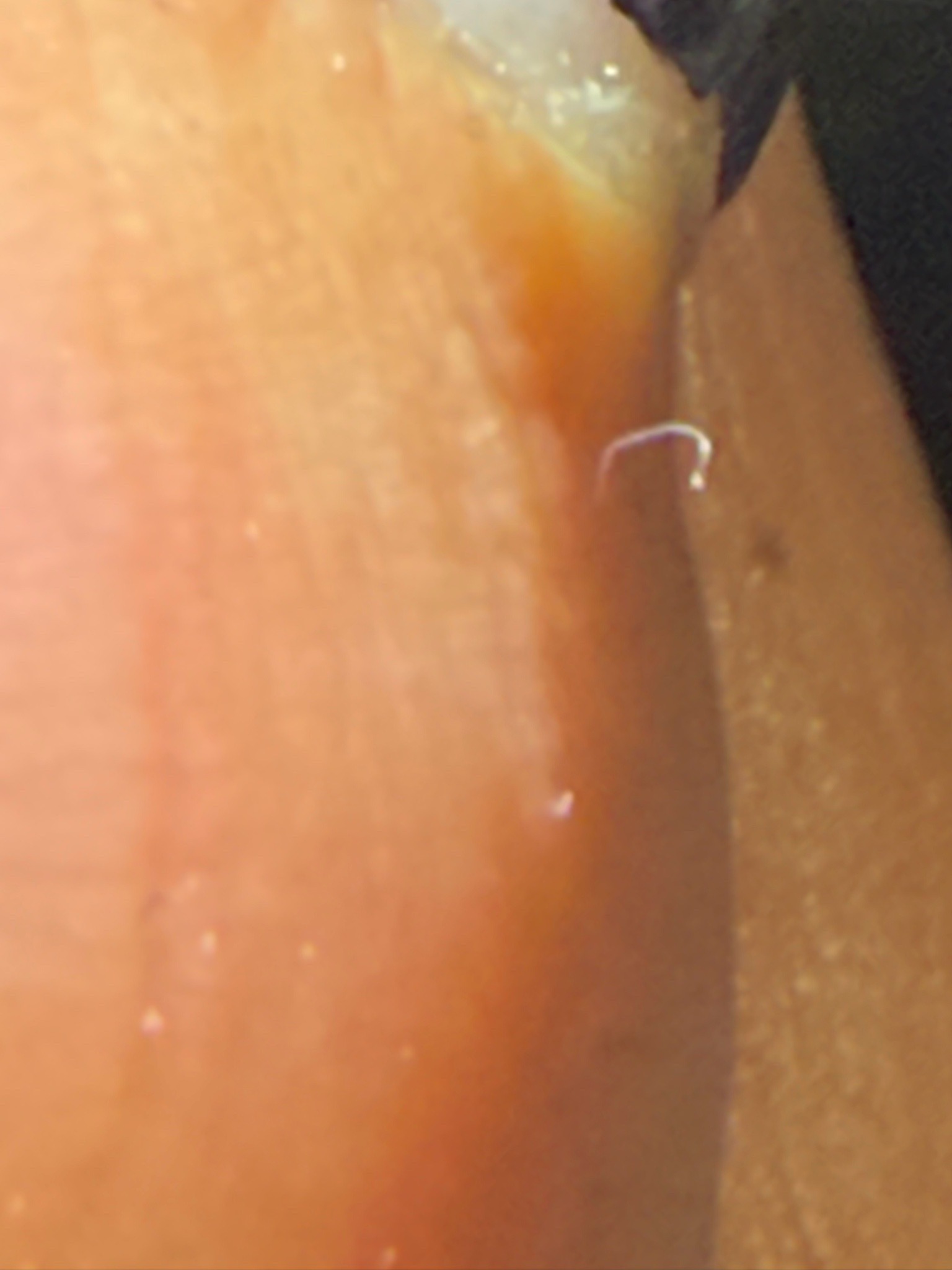
Pinworm
Scientific Name: Enterobius vermicularis
Order & Family: Order: Oxyurida, Family: Oxyuridae
Size: Males: 2-5 mm; Females: 8-13 mm
Natural Habitat
Human large intestine (specifically the cecum and colon)
Diet & Feeding
Intestinal contents and tissues of the host
Behavior Patterns
Female pinworms migrate out of the anus at night to lay thousands of eggs on the surrounding skin, which can cause intense itching. The life cycle typically takes 2 to 6 weeks.
Risks & Benefits
Common intestinal parasite that causes enterobiasis; risks include intense itching (pruritus ani) and secondary skin infections from scratching. They provide no known benefits to the host.
Identified on: 6/23/2026