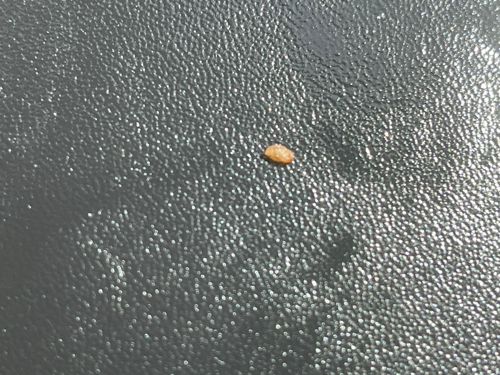
Proglottid (Tapeworm segment)
Scientific Name: Dipylidium caninum (most common in domestic settings)
Order & Family: Order: Cyclophyllidea; Family: Dipylidiidae
Size: 3 mm to 12 mm in length (roughly the size of a grain of rice)
Natural Habitat
The intestines of host animals (dogs, cats, humans); shed segments are found on host bedding, fur near the anus, or in feces.
Diet & Feeding
Parasitic absorption of host nutrients within the intestinal tract.
Behavior Patterns
Segments act as mobile egg sacs. Once passed in stool, they crawl away from the feces via muscular contractions to distribute eggs into the environment to be consumed by flea larvae.
Risks & Benefits
Risk: Indicates a tapeworm infestation in a pet or human. While generally low in direct pathogenicity, they cause nutrient loss and anal itching. Transmission usually occurs via accidental ingestion of an infected flea.
Identified on: 2/16/2026