
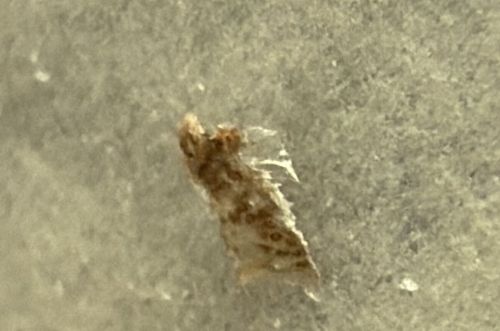
Household Casebearer or Plaster Bagworm
Phereoeca uterella (or sometimes Phereoeca allutella in older literature of similar species)
- Order & Family
- Order: Lepidoptera, Family: Tineidae (Clothes Moths)
- Size
- The case is usually 8-13 mm (approx 0.3-0.5 inches) long.
Natural Habitat
Commonly found indoors on walls, especially in humid climates like Florida and tropical regions. They prefer darker, undisturbed areas like closets, baseboards, or under furniture.
Diet & Feeding
The larvae feed on keratin (hairs, wool, spider webs), silk, dried insects, and various organic detritus found in house dust.
Behavior Patterns
The larva constructs a silken case shaped like a flattened pumpkin seed or a cantaloupe seed, covering it with sand, soil, and fiber debris for camouflage. It drags this case around as it moves. It has two openings, allowing the larva to feed from either end.
Risks & Benefits
Risks: They are generally harmless to humans (non-biting, non-toxic), but can be minor household pests if they damage woolen fabrics or silks, though they primarily eat cobwebs and dust. Benefits: They clean up spider webs and dead insects.