Head Louse (Nit/Casing)
Scientific Name: Pediculus humanus capitis
Order & Family: Order: Phthiraptera, Family: Pediculidae
Size: 2.5–3.0 mm (adults), egg casings (nits) are approx. 0.8 mm x 0.3 mm
Natural Habitat
The human scalp, primarily near the ears and neckline, residing on hair shafts close to the skin for warmth.
Diet & Feeding
Strictly hematophagous (blood-feeding); adults and nymphs feed on human blood from the scalp multiple times a day.
Behavior Patterns
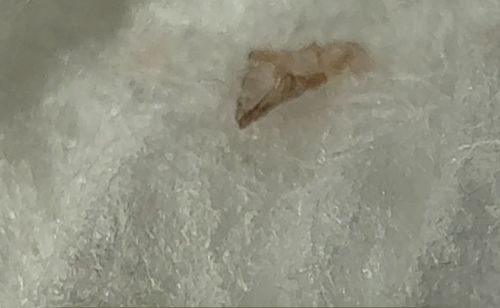
They are flightless parasites that move by crawling along hair shafts. They glue their eggs (nits) firmly to the base of hair strands. The image appears to show an empty nit casing or a hatched shell rather than a live adult.
Risks & Benefits
Risks: Intense itching, allergic reactions to saliva, secondary skin infections from scratching, and disrupted sleep. They do not typically spread disease but are a significant social nuisance.
Identified on: 3/2/2026