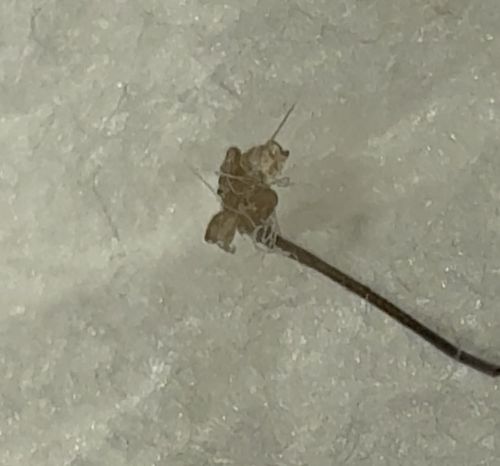
Pubic Louse (Crab Louse)
Scientific Name: Pthirus pubis
Order & Family: Psocodea: Pthiridae
Size: 1.1 to 1.8 millimeters in length (slightly smaller than body or head lice).
Natural Habitat
Exclusively found on the human body, specifically inhabiting coarse hair such as pubic hair, but occasionally found in eyelashes, eyebrows, beard, mustache, and chest or armpit hair.
Diet & Feeding
Hematophagous (blood-feeding); they feed exclusively on human blood several times a day.
Behavior Patterns
They are relatively immobile compared to head lice, anchoring themselves firmly to hair shafts using unique, claw-like legs adapted for grasping coarse hair. They complete their entire life cycle (egg/nit, nymph, adult) on the human host and spread primarily through direct intimate contact or less commonly through shared bedding or towels.
Risks & Benefits
Risks include intense itching (pruritus due to allergic reaction to saliva), skin irritation, and possible secondary bacterial infections from scratching. They are vectors for a socially stigmatized condition (pediculosis pubis) but are not known to transmit diseases like typhus (unlike body lice). There are no ecological benefits as they are obligate parasites.
Identified on: 2/18/2026