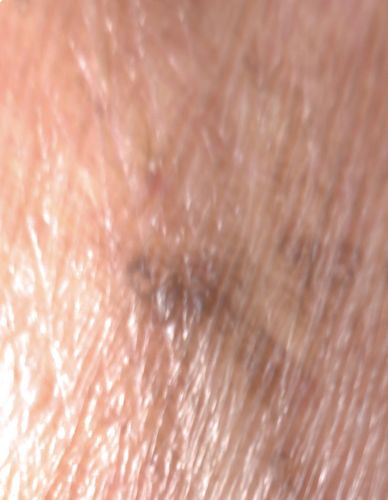
Scabies Mite (likely burrow appearance)
Scientific Name: Sarcoptes scabiei var. hominis
Order & Family: Order: Sarcoptiformes, Family: Sarcoptidae
Size: Microscopic; females are 0.30–0.45 mm long and 0.25–0.35 mm wide; males are slightly smaller
Natural Habitat
The epidermis (upper layer) of human skin, particularly in folds and crevices like between fingers, wrists, elbows, and axillae
Diet & Feeding
Feeds on human skin cells and lymph fluid while burrowing
Behavior Patterns
Female mites burrow into the upper layer of the skin to lay eggs, creating serpentine burrows; this triggers an intense allergic itch response, typically worse at night
Risks & Benefits
Risks include severe itching, skin rashes, and secondary bacterial infections (like impetigo) from scratching; highly contagious through skin-to-skin contact
Identified on: 2/23/2026