
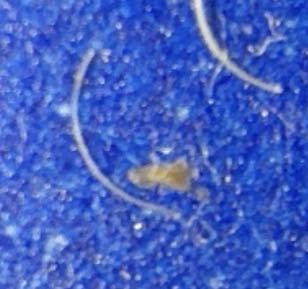
Dust Mite
Dermatophagoides spp. (commonly D. pteronyssinus or D. farinae)
- Order & Family
- Order: Sarcoptiformes, Family: Pyroglyphidae
- Size
- Microscopic; typically 0.2 to 0.3 millimeters in length. Generally invisible to the naked eye without magnification.
Natural Habitat
Found primarily in human dwellings, thriving in soft furnishings like mattresses, pillows, carpets, and upholstered furniture. They prefer warm (20-25°C), humid environments.
Diet & Feeding
They feed primarily on dead skin cells (dander) shed by humans and animals, as well as some bacteria and fungi found in dust.
Behavior Patterns
Dust mites are free-living (not parasitic) and do not burrow under skin. They tend to congregate in high numbers in bedding and carpets where moisture and food sources are abundant. Their lifecycle from egg to adult takes about a month.
Risks & Benefits
Risks: A major source of indoor allergens. Their feces and decaying body fragments can trigger allergic reactions (sneezing, runny nose) and asthma attacks in sensitive individuals. Benefits: They act as decomposers in the micro-ecosystem by consuming dead organic matter, though this benefit is negligible to humans compared to the allergy risk.