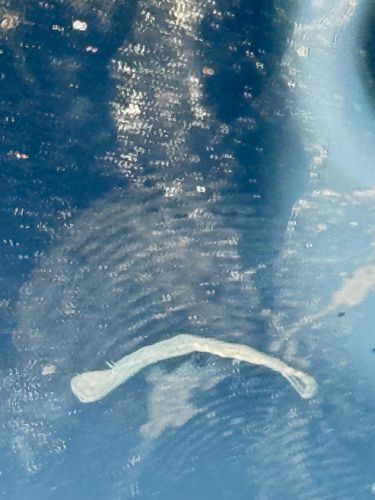
Pinworm
Scientific Name: Enterobius vermicularis
Order & Family: Order: Oxyurida, Family: Oxyuridae
Size: Females are 8–13 mm long; males are 2–5 mm long.
Natural Habitat
Human gastrointestinal tract, primarily inhabiting the colon and rectum; eggs can be found in household dust and on surfaces.
Diet & Feeding
Absorbs nutrients from the host's intestinal contents.
Behavior Patterns
Nocturnal activity where gravid females migrate out of the anus to deposit eggs on the perianal skin, causing itching. Life cycle depends entirely on a human host.
Risks & Benefits
Risk: Causes enterobiasis, characterized by intense anal itching and potential secondary infections from scratching. No ecosystem benefits; exclusively a human parasite.
Identified on: 2/19/2026