Human Scabies Mite
Scientific Name: Sarcoptes scabiei var. hominis
Order & Family: Order Sarcoptiformes; Family Sarcoptidae
Size: Microscopic; females are approximately 0.30–0.45 mm long, while males are about half that size.
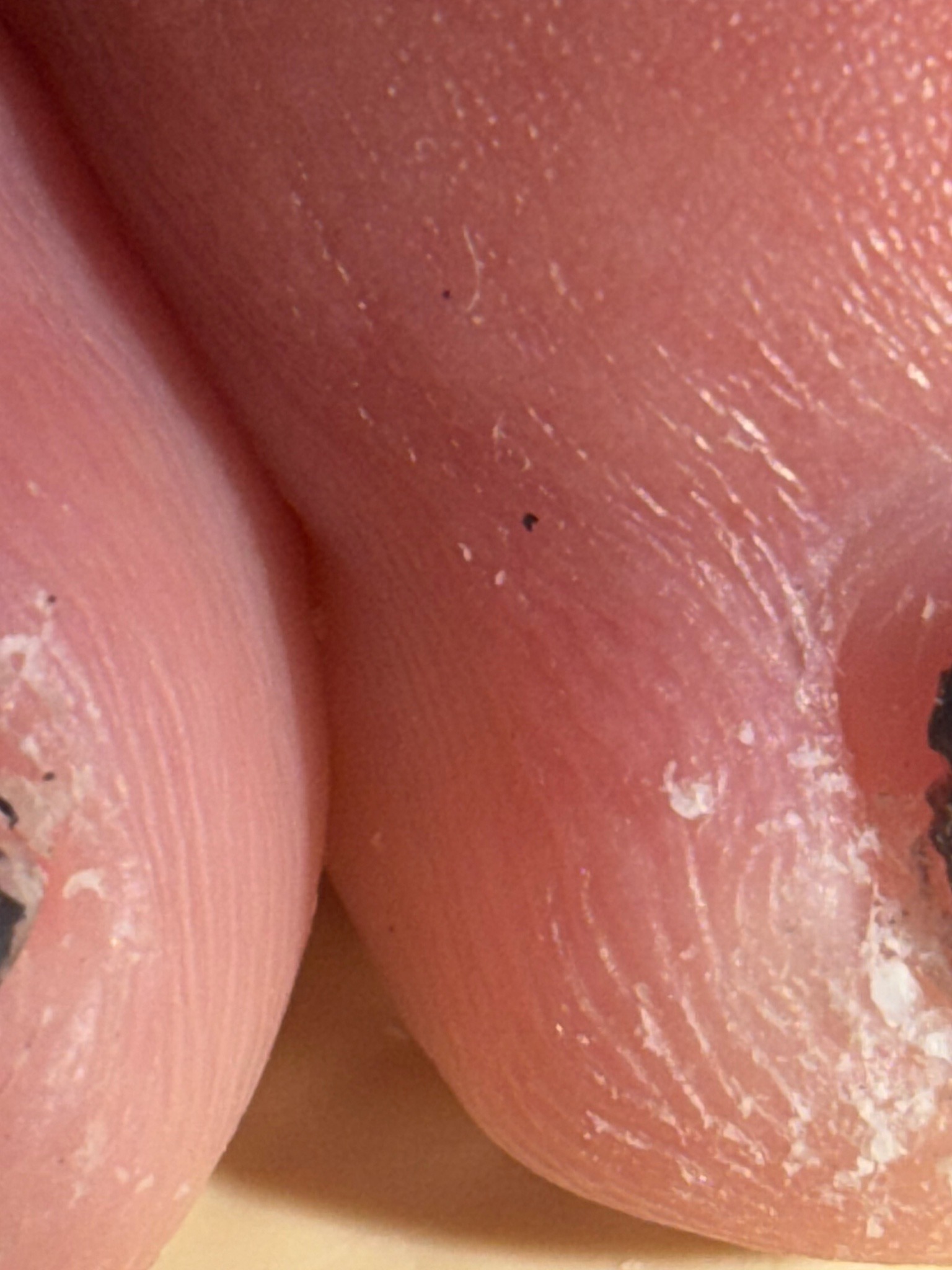
Natural Habitat
Deep within the skin of humans, specifically the stratum corneum (outer layer), often in thin-skinned areas such as between fingers or toes.
Diet & Feeding
Consumes skin cells and fluid (extracellular fluid) from the human host.
Behavior Patterns
Female mites burrow into the skin to lay eggs. The life cycle involves egg, larva, nymph, and adult stages over about 10–14 days. Symptoms typically worsen at night when the mites are most active.
Risks & Benefits
Risks include intense itching, rashes, and the possibility of secondary bacterial infections (like impetigo) due to scratching. Highly contagious through direct skin-to-skin contact. No known ecological benefits.
Identified on: 6/25/2026