
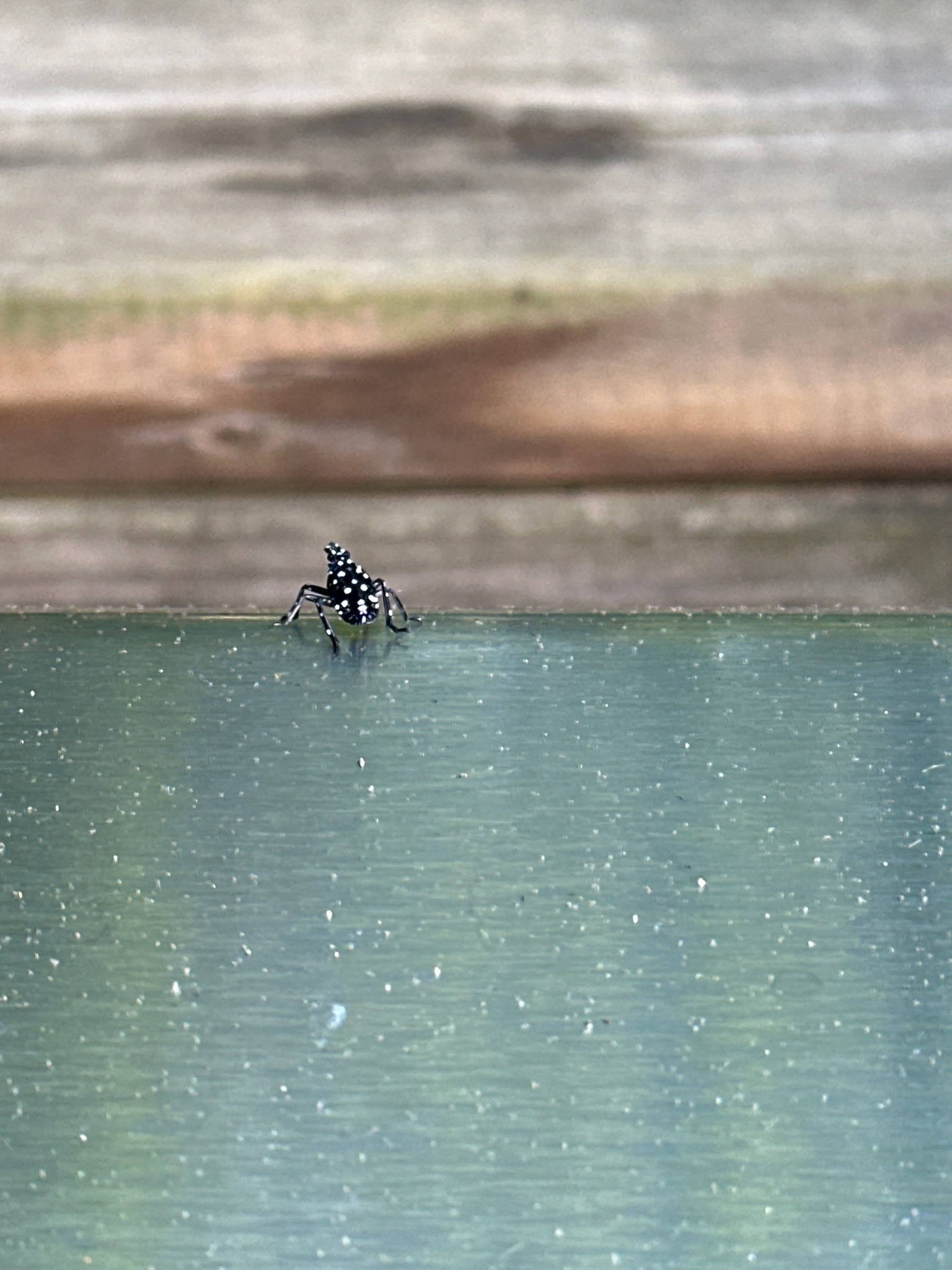
Spotted Lanternfly (Early Stage Nymph)
Lycorma delicatula
- Order & Family
- Hemiptera: Fulgoridae
- Size
- 1st through 3rd stage nymphs are approximately 1/8 to 1/2 inch (3 to 12 mm) long.
Natural Habitat
Found in forests, orchards, and residential areas, primarily on host plants like Tree-of-heaven (Ailanthus altissima), grapevines, and various fruit and timber trees.
Diet & Feeding
Herbivorous; they use piercing-sucking mouthparts to feed on plant sap from stems and leaves of over 70 different plant species.
Behavior Patterns
Early nymphs are black with white spots and are strong jumpers. They undergo four nymphal stages (instars) before becoming winged adults. They secrete a sticky substance called honeydew while feeding.
Risks & Benefits
Highly invasive and destructive pest that poses a significant threat to agriculture (especially grapes and hops) and forestry. Honeydew secretion encourages sooty mold growth, which can kill plants. They are not harmful to humans or pets but are an ecological risk.