
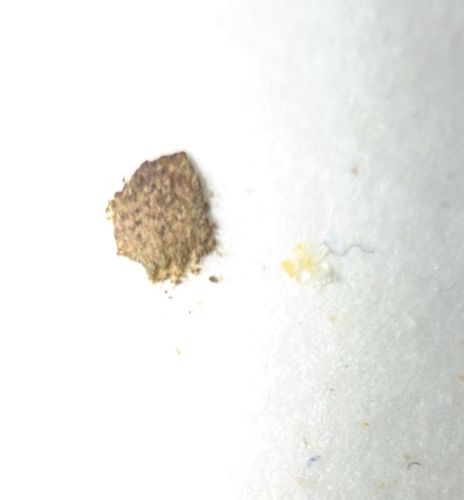
Household Casebearer or Plaster Bagworm
Phereoeca uterella (sometimes referred to as Phereoeca allutella in older literature, though P. uterella is more precise for the common household variety)
- Order & Family
- Order: Lepidoptera (Moths & Butterflies); Family: Tineidae (Clothes Moths)
- Size
- Larval case is typically 8 mm to 13 mm (0.3 to 0.5 inches) in length.
Natural Habitat
Typically found inside human habitations, often in high humidity environments. Common locations include closets, underneath furniture, along baseboards, and in corners of garages, particularly in warm, tropical, or subtropical climates like Florida.
Diet & Feeding
Detritivores that feed on old spider webs, wool, hair, lint, dead insects, and dried animal matter. They do not typically eat plaster (despite the name) but will attach to plaster walls.
Behavior Patterns
The larva constructs a distinctive flattened, pumpkin-seed-shaped protective case out of silk and fiber, which it carries around. It has openings at both ends so the larva can turn around inside without leaving the case. They are often seen dragging their case across walls or floors.
Risks & Benefits
Risks: Considered a minor pest; can damage woolens, carpets, and fur, though usually feed on spider webs and loose debris. Benefit: They act as cleaners by eating old spider webs and dead insects, though their presence is generally considered a nuisance in homes.