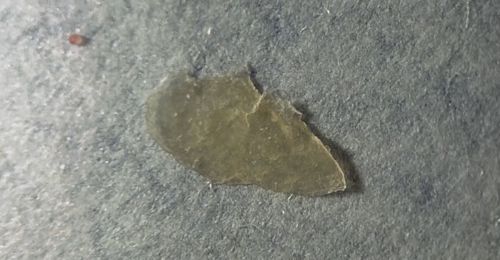
Tapeworm Segment (dried proglottid)
Scientific Name: Dipylidium caninum (most common species found in pets)
Order & Family: Order: Cyclophyllidea, Family: Dipylidiidae
Size: Typically 3-5mm long when dried (resembling a sesame seed); can be longer (up to 12mm) when fresh and moving.
Natural Habitat
Intestinal tract of dogs and cats; dried segments are often found on pet bedding, carpets, or fur around the pet's rear.
Diet & Feeding
The adult tapeworm absorbs nutrients through its skin from the host's intestinal contents.
Behavior Patterns
Adult worms live in the intestine. They shed segments (proglottids) that are filled with eggs. These segments exit via the anus and may crawl briefly when fresh before drying out into hard, seed-like objects.
Risks & Benefits
Risks: Indicates a parasitic infection in pets which requires veterinary treatment. While generally not severe, heavy infestations can cause weight loss or irritation. Humans (especially children) can be infected if they accidentally ingest an infected flea, though this is rare. Benefits: None.
Identified on: 2/19/2026