
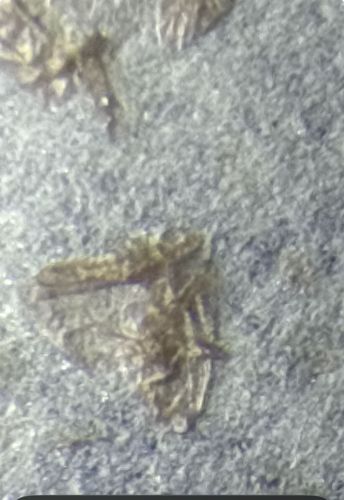
Drain Fly
Psychoda spp. (often Psychoda alternata)
- Order & Family
- Order: Diptera, Family: Psychodidae
- Size
- 1.5 to 5 millimeters (approx. 1/16 to 1/5 inch)
Natural Habitat
Found in moist, decaying environments such as bathroom or kitchen drains, sewers, septic tanks, and slow-moving or stagnant water rich in organic matter.
Diet & Feeding
Larvae feed on wet, decaying organic matter, algae, fungi, and bacteria found in drains or stagnant water. Adults do not feed significantly but may consume nectar or polluted water.
Behavior Patterns
They are weak flyers often seen crawling on walls or ceilings near drains rather than flying. They are nocturnal and attracted to light. Their life cycle from egg to adult takes about 1-3 weeks.
Risks & Benefits
Risks: They are generally considered a nuisance pest. While they don't bite or sting, they can breed in large numbers and potentially transport bacteria from the filth they inhabit to surfaces. Benefits: Larvae help break down organic sludge in drains.