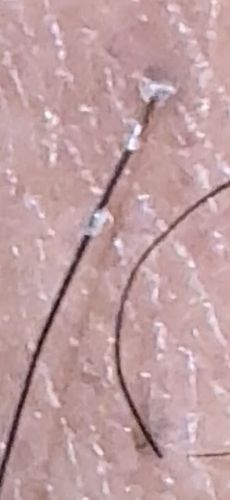
Head Louse Egg (Nit)
Scientific Name: Pediculus humanus capitis (Egg Stage)
Order & Family: Order: Psocodea (formerly Phthiraptera), Family: Pediculidae
Size: Approximately 0.8 mm in length (the size of a pinhead or a knot in a thread).
Natural Habitat
Human scalp and hair shafts, typically within 1/4 inch (6mm) of the scalp surface.
Diet & Feeding
Nits (eggs) do not eat; however, once hatched into nymphs and adults, they feed exclusively on human blood.
Behavior Patterns
Nits are cemented to the hair shaft by the female louse using a glue-like substance. They incubate for about 7 to 10 days before hatching into nymphs.
Risks & Benefits
Risks include intense itching (pruritus), sleep disturbance, and secondary skin infections from scratching. They do not spread disease. There are no ecological benefits to humans.
Identified on: 1/14/2026