Dried Earthworm
Scientific Name: Lumbricus terrestris (most common, though precise species is hard to determine when desiccated)
Order & Family: Order: Opisthopora, Family: Lumbricidae
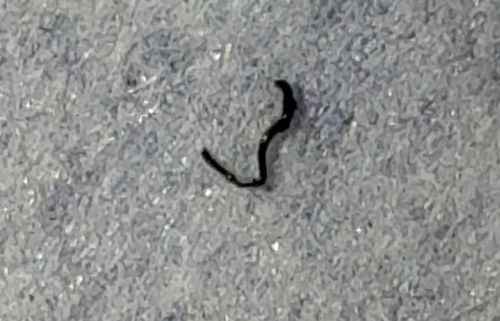
Size: Living: 90–300 mm (3.5–12 in). Desiccated/Dried (like image): Shrunken significantly, often appearing as a thin, brittle wire 2-5 cm long.
Natural Habitat
Typically found in moist soil rich in organic matter. When found indoors as shown in the image, they have usually wandered in from wet soil outside and dried out on carpets or floors due to lack of humidity.
Diet & Feeding
Detritivore; feeds on decaying organic matter, such as dead leaves, roots, and soil microbes.
Behavior Patterns
They are burrowers that surface during heavy rains to breathe (preventing drowning) or mate. Once indoors, they lack the moisture needed to survive respiration through their skin, leading them to curl up and dehydrate rapidly.
Risks & Benefits
Risks: None to humans or pets; they are not pests and do not carry diseases or bite. It is simply a nuisance to find dead ones inside. Benefits: Extremely beneficial for soil health, aeration, and nutrient cycling (vermicomposting).
Identified on: 2/14/2026