
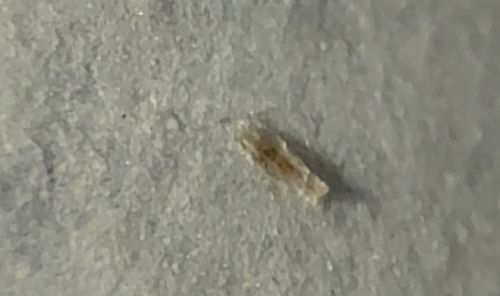
Household Casebearer (often confused with the Plaster Bagworm or Case-bearing Clothes Moth)
Phereoeca uterella (or closely related Tinea pellionella)
- Order & Family
- Order: Lepidoptera, Family: Tineidae
- Size
- Larval case is usually 8 to 13 mm (0.3 to 0.5 inches) in length.
Natural Habitat
Typically found indoors in humid environments, often seen clinging to walls, ceilings, baseboards, and in closets or beneath furniture where dust accumulates.
Diet & Feeding
Detritivores that feed on old spider webs, wool (carpets, clothing), human hair, pet fur, and general household dust.
Behavior Patterns
The larva builds a flattened, pumpkin-seed-shaped protective case out of silk and debris (sand, soil, and fiber) which it carries around. It has openings at both ends so the larva can turn around inside without leaving the case. They eventually pupate inside this case.
Risks & Benefits
Generally considered a minor pest. While not dangerous to human health, they can damage wool clothing, carpets, and fabrics if infestation levels are high. They are beneficial in a limited capacity as decomposers of old spider webs and dust.