
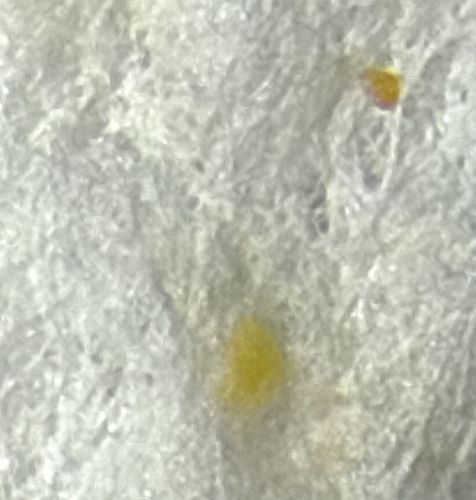
Two-Spotted Spider Mite (Tentative ID due to image quality)
Tetranychus urticae
- Order & Family
- Order: Trombidiformes; Family: Tetranychidae
- Size
- Very small, approximately 0.4 mm to 0.5 mm in length (often barely visible to the naked eye).
Natural Habitat
Typically found on the undersides of leaves of a wide variety of plants, including crops, ornamental plants, and houseplants. They thrive in hot, dry conditions.
Diet & Feeding
Herbivorous; they feed by puncturing plant cells with stylet-like mouthparts and sucking out the contents, often causing stippling or yellowing of leaves.
Behavior Patterns
They live in colonies, often creating fine webbing (silk) on plants for protection. They reproduce rapidly in warm weather, going from egg to adult in as little as a week.
Risks & Benefits
Risks: Significant agricultural and garden pest that can damage or kill plants by sucking cell sap and reducing photosynthesis. No direct risk to human health (they do not bite humans). Benefits: They serve as a food source for predatory mites and other small insects in the ecosystem.