
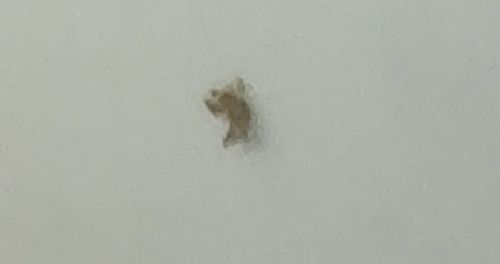
Plaster Bagworm (or Household Casebearer)
Phereoeca uterella
- Order & Family
- Order: Lepidoptera, Family: Tineidae
- Size
- Larval case is generally 8-13 mm (approx. 0.5 inches) in length.
Natural Habitat
Typically found indoors in humid environments, often seen on walls, ceilings, and in corners of garages, closets, and underneath spiderwebs. They originate from tropical climates.
Diet & Feeding
Detritivores; they feed on old spider webs, book bindings, wool, hair, dead insects, lint, and other fibrous debris found in homes.
Behavior Patterns
The larva constructs a flat, pumpkin-seed-shaped protective case out of silk and particles of sand, lint, or paint, inside which it lives. It drags this case around as it moves. The larva eventually pupates inside the case before emerging as a small moth.
Risks & Benefits
Generally harmless to humans (they do not bite or sting). They are considered minor pests because they can damage natural fibers like wool or silk, but they are mostly a nuisance due to the unsightly cases they leave on walls.